Aquaponics
How to Build a Cheap DIY Aquaponics System
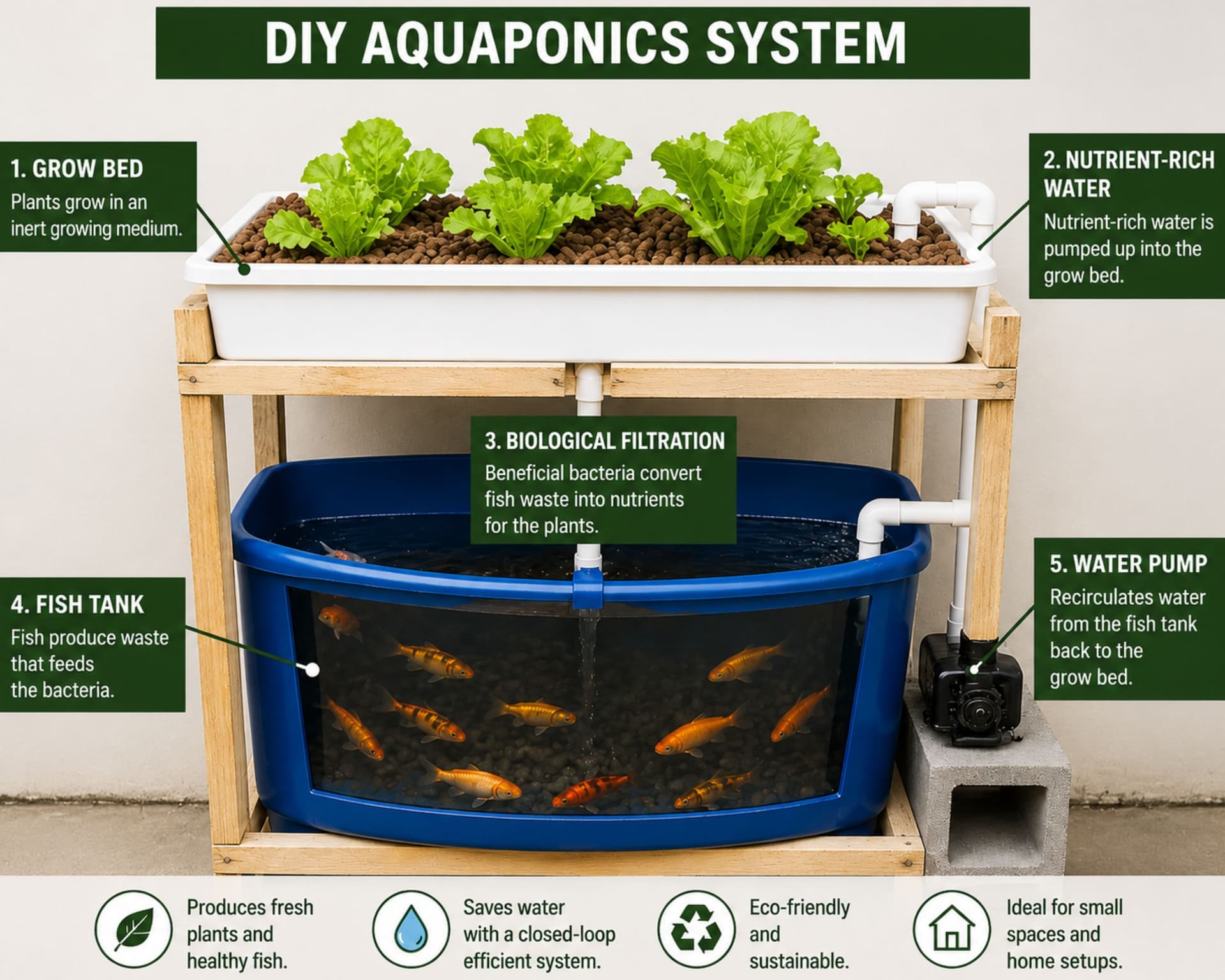
Aquaponics combines fish, water, and plants in a system where everything works together. Fish produce waste, that waste feeds beneficial bacteria, and those bacteria convert nutrients into food available for plants. The plants help clean the water, and that water returns back to the fish tank.
It sounds complicated, but a cheap DIY aquaponics system can be built with simple materials: a tank, a water pump, a grow bed, gravel or grow media, and a few fast-growing plants. The key is not starting big. The key is building something simple, stable, and easy to maintain.
What Is a DIY Aquaponics System?
A DIY aquaponics system is a way to grow plants using water with fish. It is not pure hydroponics because the nutrients do not come from a bottle. They come from the natural cycle between fish, bacteria, and plants.
In simple terms: fish dirty the water, bacteria convert that waste into nutrients, plants absorb those nutrients, and the water returns cleaner to the tank.
That cycle is called biological filtration. Do not overcomplicate the name. It simply means beneficial bacteria help transform fish waste into food for plants.
SEO Title
How to Build a Cheap DIY Aquaponics System Step by Step
Meta Description
Learn how to build a cheap DIY aquaponics system with a tank, fish, pump, grow bed, and easy-to-grow plants.
Materials You Need to Get Started
You do not need expensive equipment to build your first aquaponics setup. Many people start with reused containers, food-grade buckets, IBC totes, or plastic storage bins.
- Fish tank or container
- Water pump
- Grow bed
- PVC pipes or tubing
- Expanded clay, gravel, or grow media
- Air pump and air stone
- Fish food
- Plants
Start small. A stable small system is far better than a large system that constantly fails.
Best Fish for Aquaponics
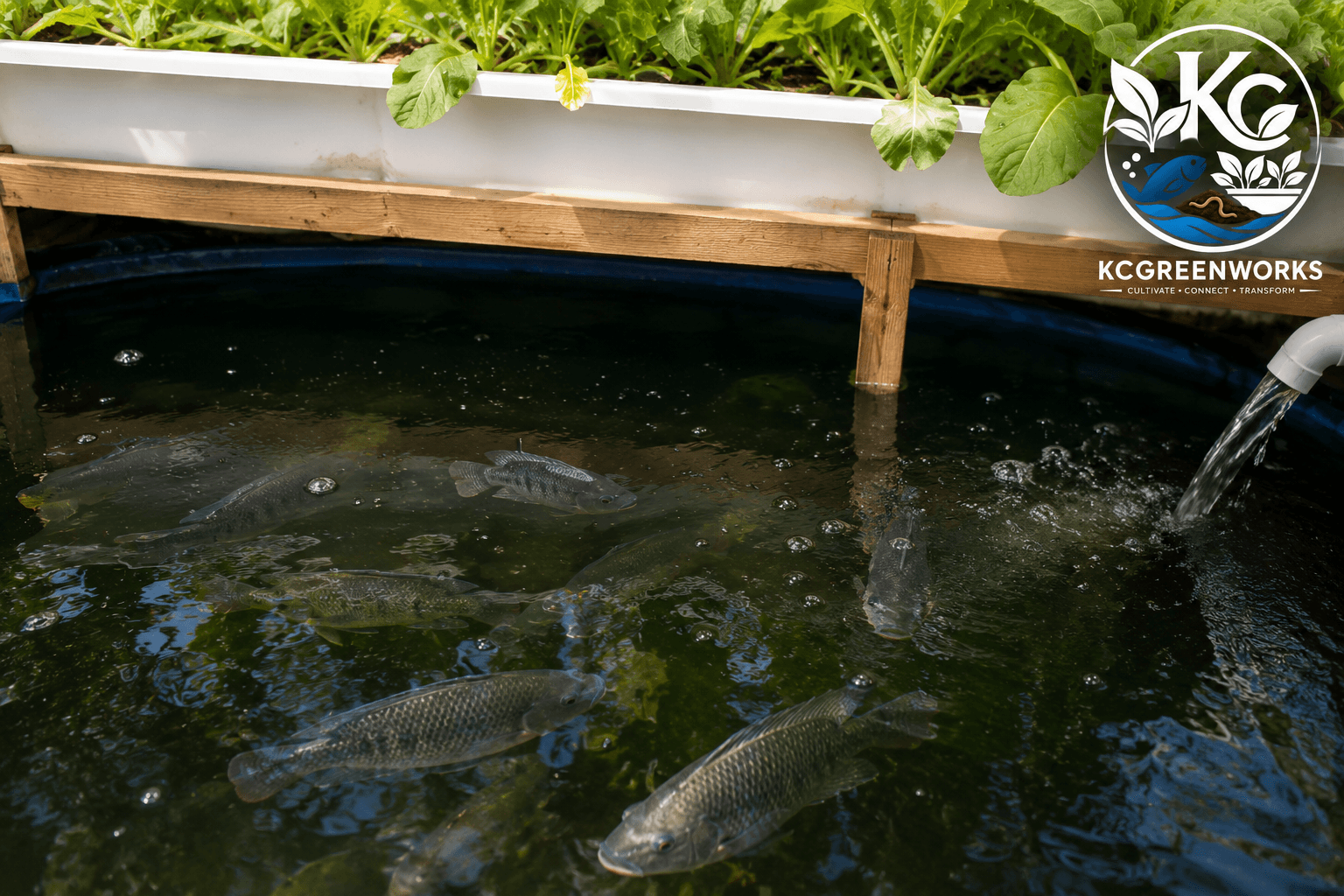
Tilapia is one of the most common fish used in aquaponics because it grows fast, tolerates water fluctuations well, and adapts easily. However, depending on your location and climate, you can also use goldfish, koi, catfish, bluegill, or even guppies in smaller systems.
The most important thing is stability. Healthy fish create a stable nutrient source for the entire system.
Avoid overcrowding the tank. Beginners often add too many fish too quickly, which creates ammonia spikes and unstable water conditions.
Water Quality and System Balance
Water quality controls everything in aquaponics. If the water is unhealthy, the fish suffer, bacteria stop working properly, and the plants slow down.
Monitor these basic parameters:
- pH
- Water temperature
- Ammonia
- Nitrite
- Nitrate
- Oxygen levels
Most beginner systems perform well with a pH between 6.8 and 7.2. Keep the water moving constantly and make sure the fish always have enough oxygen.
Beginner Mistakes to Avoid
- Adding fish before cycling the system
- Overfeeding fish
- Using treated water with chlorine
- Adding too many fish at once
- Using weak water circulation
- Ignoring water testing
Most aquaponics failures happen because people rush the process. Stability matters more than speed.
Best Plants for Beginners
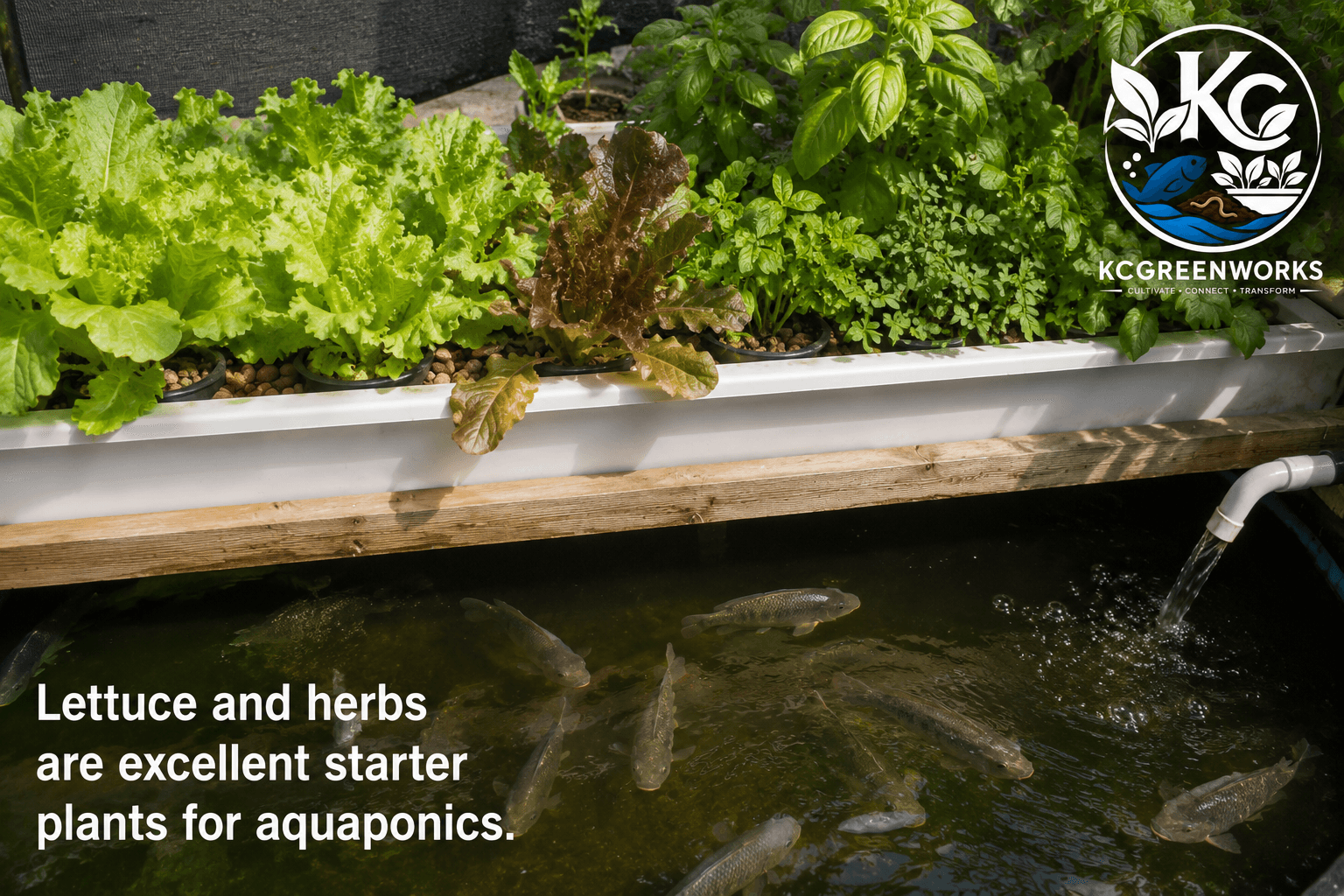
Fast-growing leafy greens are usually the easiest plants for a first aquaponics system.
- Lettuce
- Basil
- Mint
- Kale
- Swiss chard
- Green onions
Once the system becomes stable, you can experiment with tomatoes, peppers, cucumbers, and larger fruiting plants.
How the Nitrogen Cycle Works
The nitrogen cycle is the foundation of aquaponics. Fish release ammonia through waste and respiration. Beneficial bacteria convert ammonia into nitrites and later into nitrates. Plants absorb those nitrates as nutrients.
Without bacteria, the system collapses. That is why cycling the system before adding too many fish is critical.
Realistic Expectations for Beginners
Your first aquaponics system does not need to be perfect. Expect to make adjustments, fix leaks, change water flow, and learn through observation.
When I started my first system, I realized very quickly that water movement changes everything. One small blockage or poor return flow can affect oxygen levels, plant growth, and fish health.
The people who succeed long term are usually the ones who stay patient and keep improving little by little.
Conclusion
Building a cheap DIY aquaponics system does not mean building something poorly made. It means starting smart: small size, simple materials, strong water circulation, and beginner-friendly plants.
If you understand the basic cycle between fish, bacteria, and plants, you already have the foundation. Do not chase perfection on day one. Build the system, test it without fish, adjust the water flow, add a few fish, and observe.
Aquaponics is practical, educational, and powerful. A small system can teach you enough to later scale into something bigger, more productive, and more visually impressive for your home or property.