Home aquaponics
Ideal aromatic herbs for aquaponics
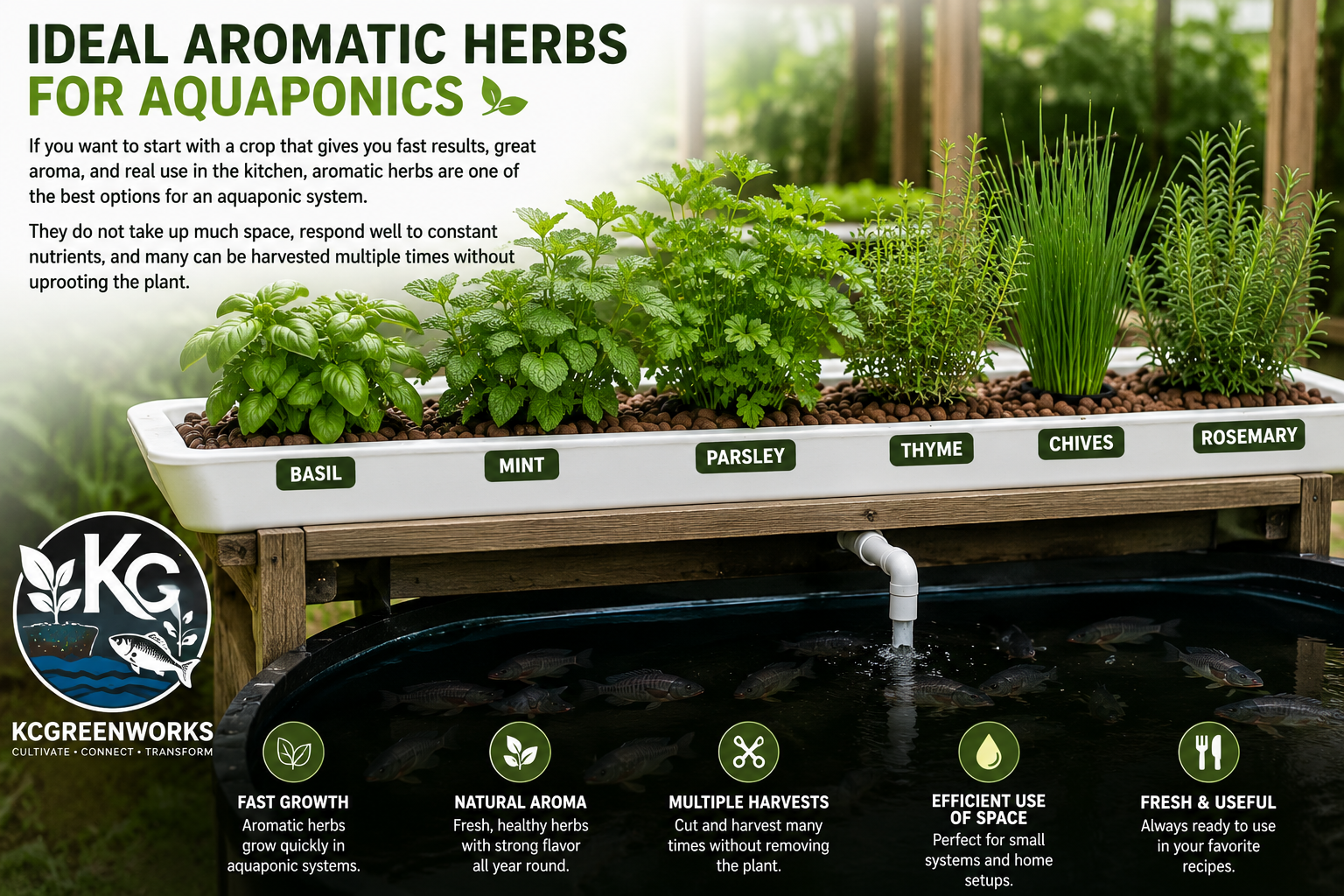
If you want to start with a crop that gives you fast results, great aroma, and real use in the kitchen, aromatic herbs are one of the best options for an aquaponic system. They do not take up much space, respond well to constant nutrients, and many can be harvested multiple times without uprooting the plant.
Why do aromatic herbs work so well in aquaponics?
Herbs like basil, cilantro, parsley, mint, and chives do not need a huge system to produce. What they need is stability: water with nutrients, oxygen at the roots, good light, and frequent harvests. That fits very well with aquaponics.
In a traditional garden, a plant can suffer from irregular watering: one day dry, the next waterlogged. In aquaponics, if the system is well designed, the root receives moisture and nutrients consistently. That stability reduces stress and can help produce more tender, greener leaves with better aroma.
Flavor does not appear by magic. It appears when the plant grows healthy, without strong stress and with good light.
Basil
Basil
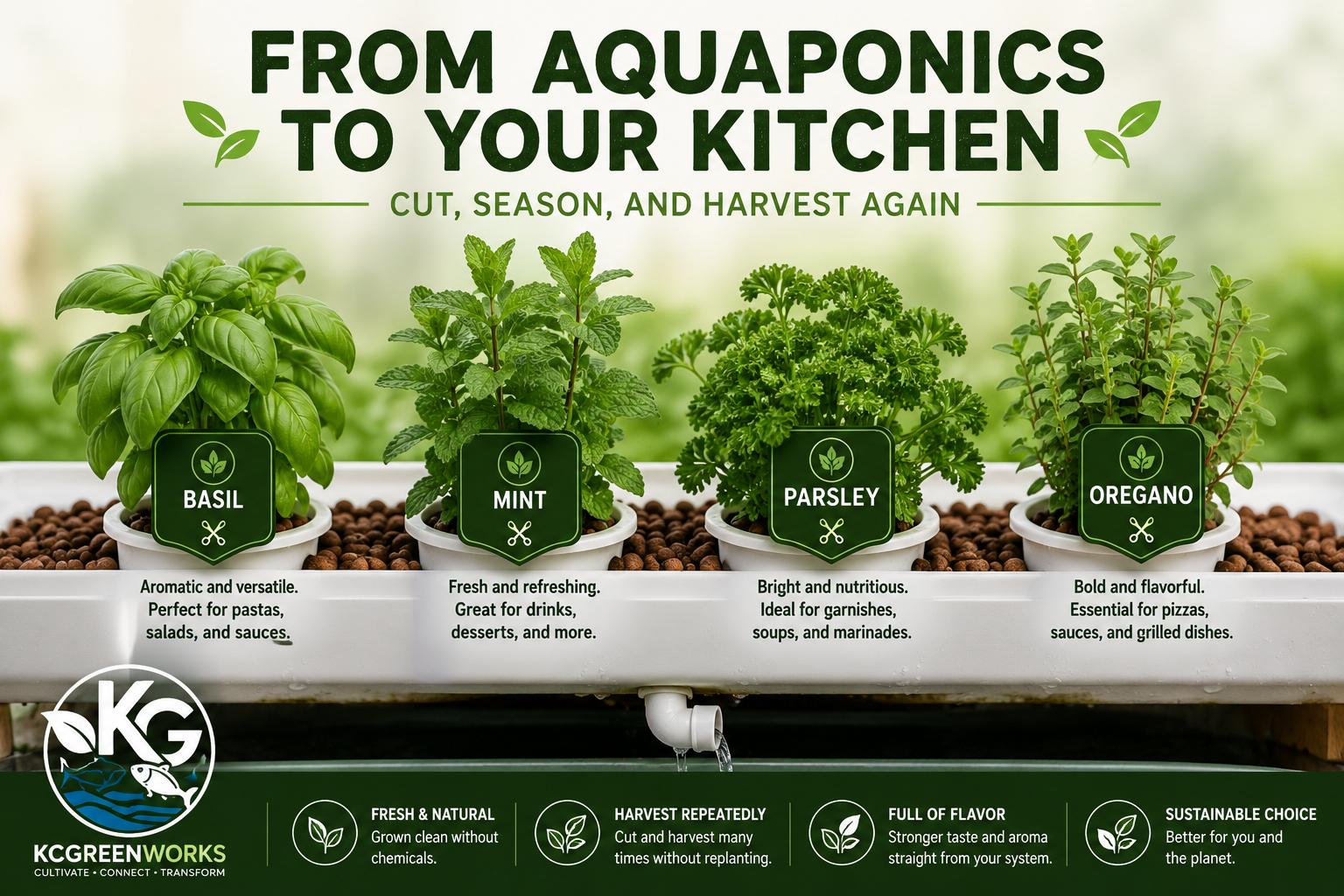
Kitchen use: Perfect for pasta, pizza, pesto, salads, and fresh sauces.
Why it works well: In aquaponics it tends to grow fast because it takes great advantage of the system's nitrates.
How to plant it: Germinate in a moist seed tray. Transplant when it has 2–3 pairs of true leaves.
Practical tip: Prune it often. The more you cut it, the more it branches out.
Cilantro
Coriander / Cilantro
Kitchen use: Ideal for Latin food, sofrito, tacos, rice, stews, and sauces.
Why it works well: Constant moisture prevents strong stress and helps keep leaves tender.
How to plant it: Plant several seeds together. Do not bury them too deep; just cover them lightly.
Practical tip: Prefers cool weather. If it gets too hot, it bolts quickly.
Parsley
Parsley
Kitchen use: Great for meats, soups, salads, potatoes, rice, and marinades.
Why it works well: Responds well to stable systems with moderate nutrients and oxygenated roots.
How to plant it: The seed takes longer than other herbs. Keep constant moisture until germination.
Practical tip: Harvest outer leaves and leave the center growing.
Mint
Mint
Kitchen use: Excellent for drinks, tea, desserts, salads, and fresh sauces.
Why it works well: Grows aggressively in aquaponics because it has strong roots and tolerates high humidity.
How to plant it: Best propagated by cutting. Place a stem in water until it develops roots.
Practical tip: Keep it under control. If left unchecked, it will take over the space.
Oregano
Oregano
Kitchen use: Key for pizza, meats, sauces, pasta, marinades, and Mediterranean food.
Why it works well: In well-oxygenated systems it maintains steady growth without waterlogging.
How to plant it: Germinates near the surface. Needs good light and not too much shade.
Practical tip: It does not like excess moisture on the leaves. Give it good ventilation.
Thyme
Thyme
Kitchen use: Works well with meats, soups, roasted vegetables, and sauces.
Why it works well: Can grow well in a media bed if the roots have oxygen and are not waterlogged.
How to plant it: Small and slow seed. You can also propagate by cuttings.
Practical tip: Do not treat it like basil. It needs less direct moisture.
Rosemary
Rosemary
Kitchen use: Excellent for chicken, meats, potatoes, breads, oils, and marinades.
Why it works well: Can work, but needs excellent drainage and plenty of light.
How to plant it: Best propagated by cutting. From seed it is slow and less practical.
Practical tip: It is more advanced. Avoid roots that stay too wet.
Chives
Chives
Kitchen use: Great for eggs, potatoes, soups, salads, and fresh toppings.
Why it works well: Grows well in small systems and allows frequent harvests.
How to plant it: Plant in groups. Transplant when roots are well developed.
Practical tip: Cut with scissors and leave 2–3 inches so it regrows.
How to plant them in an aquaponic system
The safest way is to germinate first outside the system and transplant when the plant already has roots. You can use plugs, germination sponges, coco coir, or small seed trays. It is not a good idea to toss seeds directly into the water or grow bed and expect everything to work perfectly.
- Germinate first: keep the seed tray moist, not waterlogged.
- Wait for true leaves: transplant when it has 2–3 pairs of true leaves.
- Protect the roots: do not break the root when moving the plant.
- Use good light: at least 4–6 hours of strong light or adequate artificial light.
- Harvest often: cutting the tips stimulates denser growth.
Where to plant them: media bed, NFT, or raft
For a beginner, the easiest option is to use a media bed with washed gravel, lava rock, or expanded clay. This system supports the plant, filters solids, and serves as a home for beneficial bacteria.
In NFT, herbs also work very well, especially basil, cilantro, parsley, and chives, but you need to make sure roots do not block the channel. In DWC or raft, they can grow fast with good oxygenation, but not all Mediterranean herbs tolerate that much moisture around the root.
My recommendation to get started
Start with basil, mint, parsley, and chives. They are tolerant, useful in the kitchen, and will quickly show you whether your system is stable. Afterwards you can try cilantro, oregano, thyme, and rosemary, which require more attention to temperature, ventilation, and excess moisture.
Why they can taste better
The flavor of an herb comes largely from its essential oils. A plant with good light, balanced nutrition, and steady growth tends to produce more aromatic leaves. In aquaponics, the recirculating water provides nutrients continuously while the roots stay active.
That does not mean every aquaponic system automatically produces better flavor. If there is little light, excess nitrogen, poor oxygenation, or strong heat, the plant may grow large but with less aroma. The secret is balance: nutrients, light, oxygen, and pruning.
Common mistakes
- Planting in a system that has not cycled yet.
- Adding too many plants for too few fish and too few nutrients.
- Letting basil or mint grow long without pruning.
- Not managing heat: cilantro and parsley suffer greatly in extreme heat.
- Using too little light and expecting intense flavor.
- Allowing roots to block pipes or channels.
Conclusion
Aromatic herbs are a smart entry point into the world of aquaponics because they produce quickly, take up little space, and are genuinely used in the kitchen. If you want your system to keep you motivated, do not start only with complicated plants. Start with something you can cut, smell, and use the same day.
In aquaponics, a good basil or mint plant can teach you more about stability than a large, poorly balanced system.