Vermicomposting: Complete Beginner's Guide (Done Right)
Vermicomposting is a biological system in which worms transform organic waste into worm castings (humus), one of the most complete natural fertilizers available. It is not simply composting—it is a controlled process that depends on the balance between organic matter, moisture, oxygen, and microbial activity.
When managed correctly, it reduces waste, improves soil quality, and produces high-quality fertilizer even in small spaces.
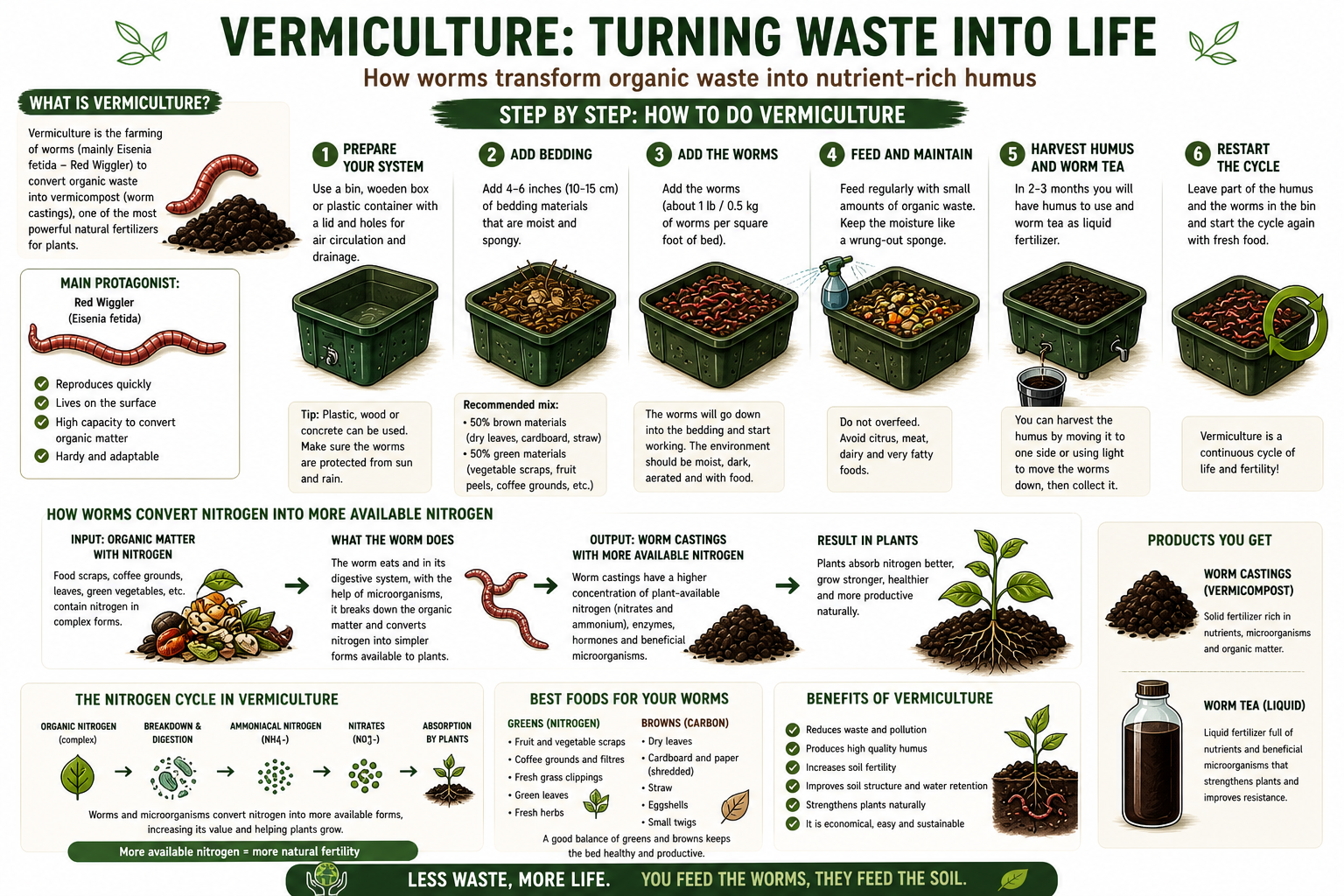
Complete process: waste → humus
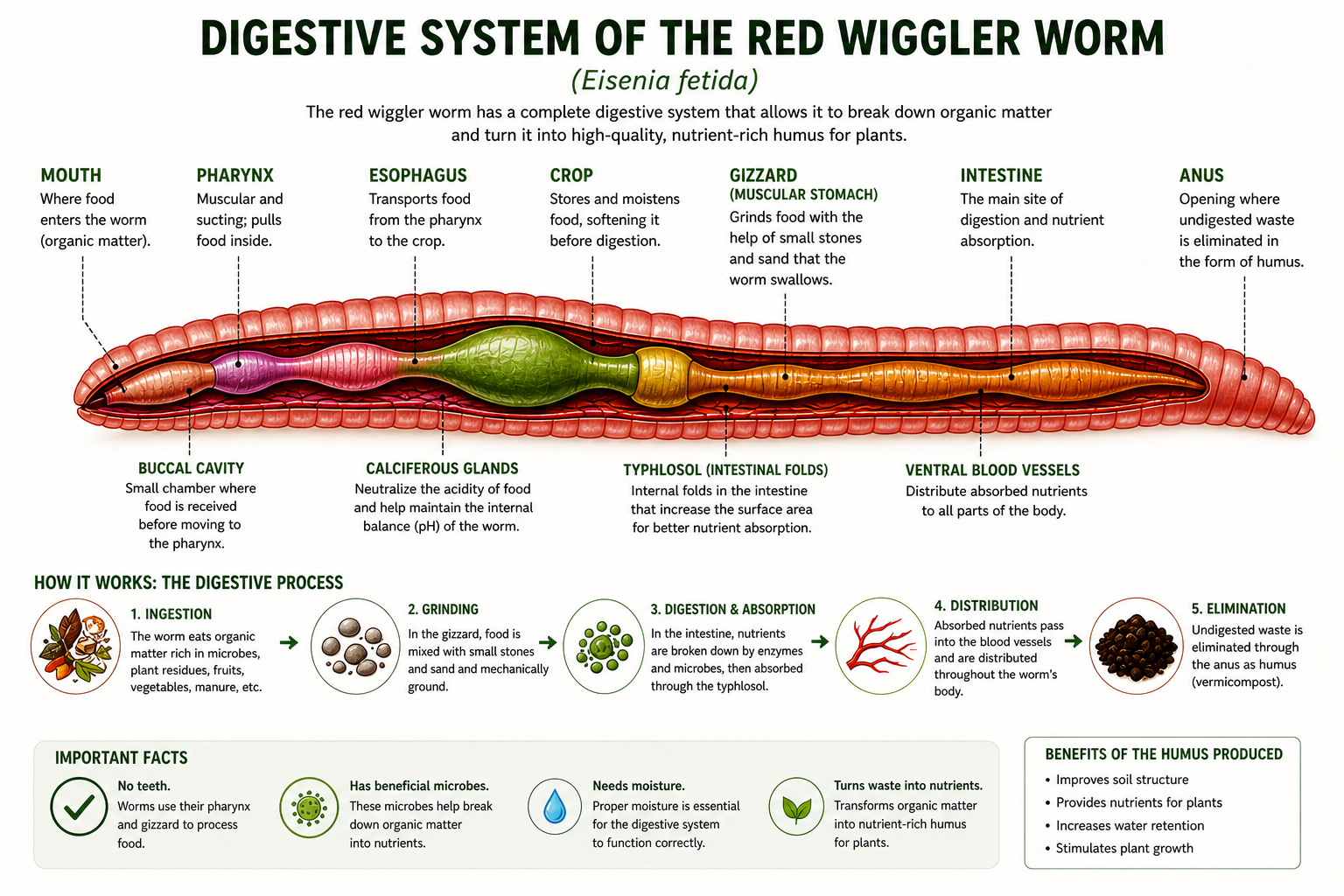
Digestive system: how worms transform matter into nutrients
What Is Vermicomposting Really?
It is a system where worms and microorganisms work together to break down organic matter. Worms do not simply "eat garbage"; they process decomposing organic material and convert it into plant-available nutrients.
The result is worm humus: a dark, stable, odorless, and highly nutritious soil amendment for plants.
Worm Species (Important)
- Eisenia fetida: the most efficient species
- Eisenia andrei: very similar behavior
- African Nightcrawler: larger but more delicate
Regular earthworms are NOT suitable for vermicomposting.
Real Benefits
- Reduces household organic waste
- Produces natural fertilizer
- Improves soil structure
- Increases beneficial microbial life
- Will not burn plants like chemical fertilizers
How to Start at Home
- Container (plastic or wood)
- Dry bedding material (cardboard, leaves)
- Composting worms
- Organic waste
- Ventilation
You can build a system on a balcony, patio, garage, or indoors.
Feeding
- Fruit scraps
- Vegetable scraps
- Coffee grounds
- Cardboard and paper
Avoid:
- Meat
- Dairy products
- Grease and oils
Ideal Conditions
- Moisture: like a wrung-out sponge
- Temperature: 55–77°F (13–25°C)
- Constant oxygen supply
- Neutral pH
Common Mistakes
- Overfeeding
- Too much water
- Lack of airflow
- Poor balance between dry and wet materials
Conclusion
Vermicomposting is one of the most efficient ways to transform waste into real soil fertility. The concept is simple, but proper management is essential for success.
It is not waste. It is a resource that has not been managed properly.