What worms can eat and how they turn it into compost
Worms do not turn “garbage” into fertilizer by magic. They work together with bacteria, fungi, and microorganisms to transform organic waste into stable, dark, life-filled humus, with a clean earth smell and highly nutritious for plants.
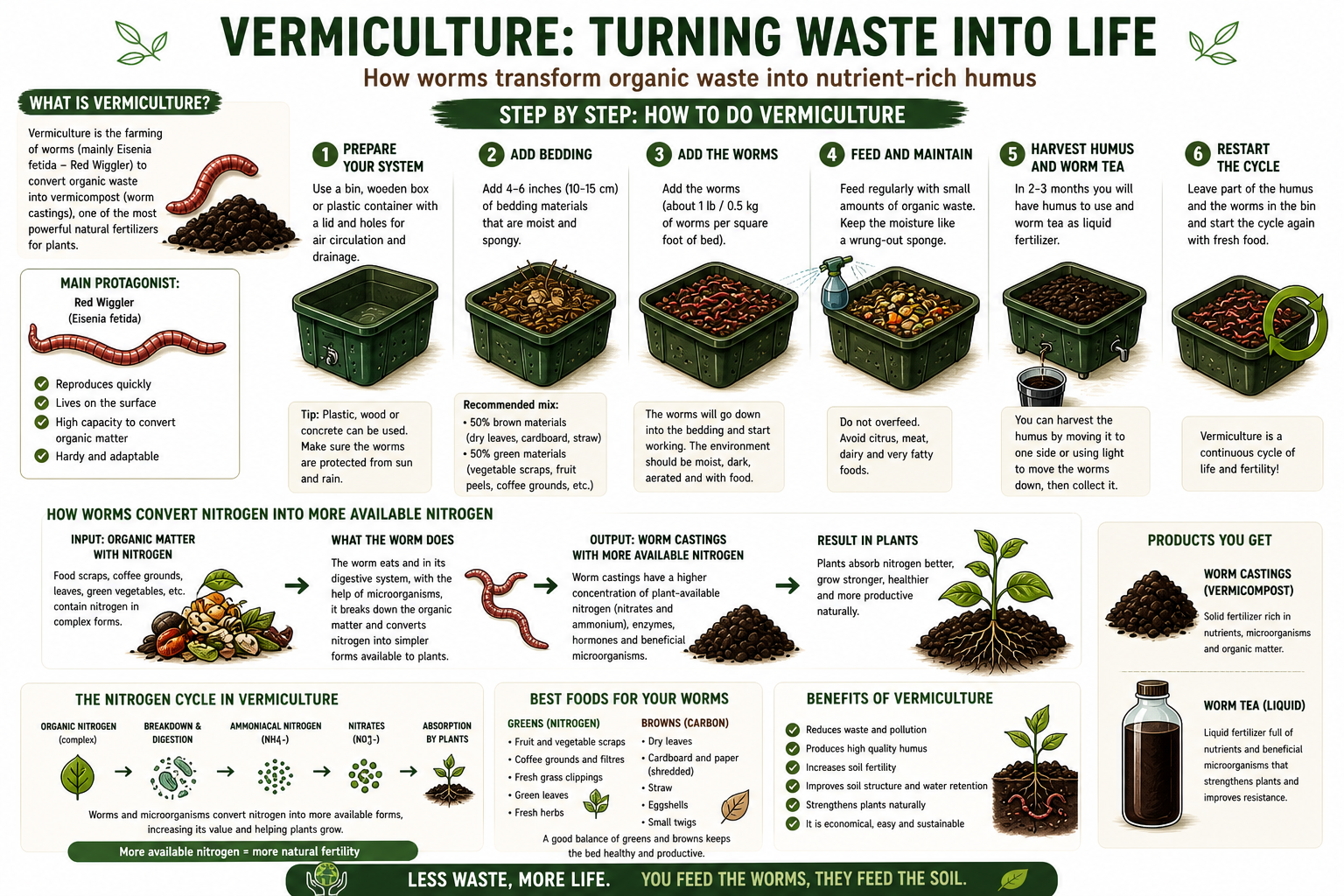
How the worm transforms waste
The red wiggler worm ingests decomposing organic matter together with microorganisms. Inside its digestive system, a key process takes place:
- Reduces the size of the material (breaks it down)
- Activates beneficial bacteria
- Stabilizes nutrients
- Converts waste into highly fertile humus
The final result is not common soil: it is a biologically active fertilizer.
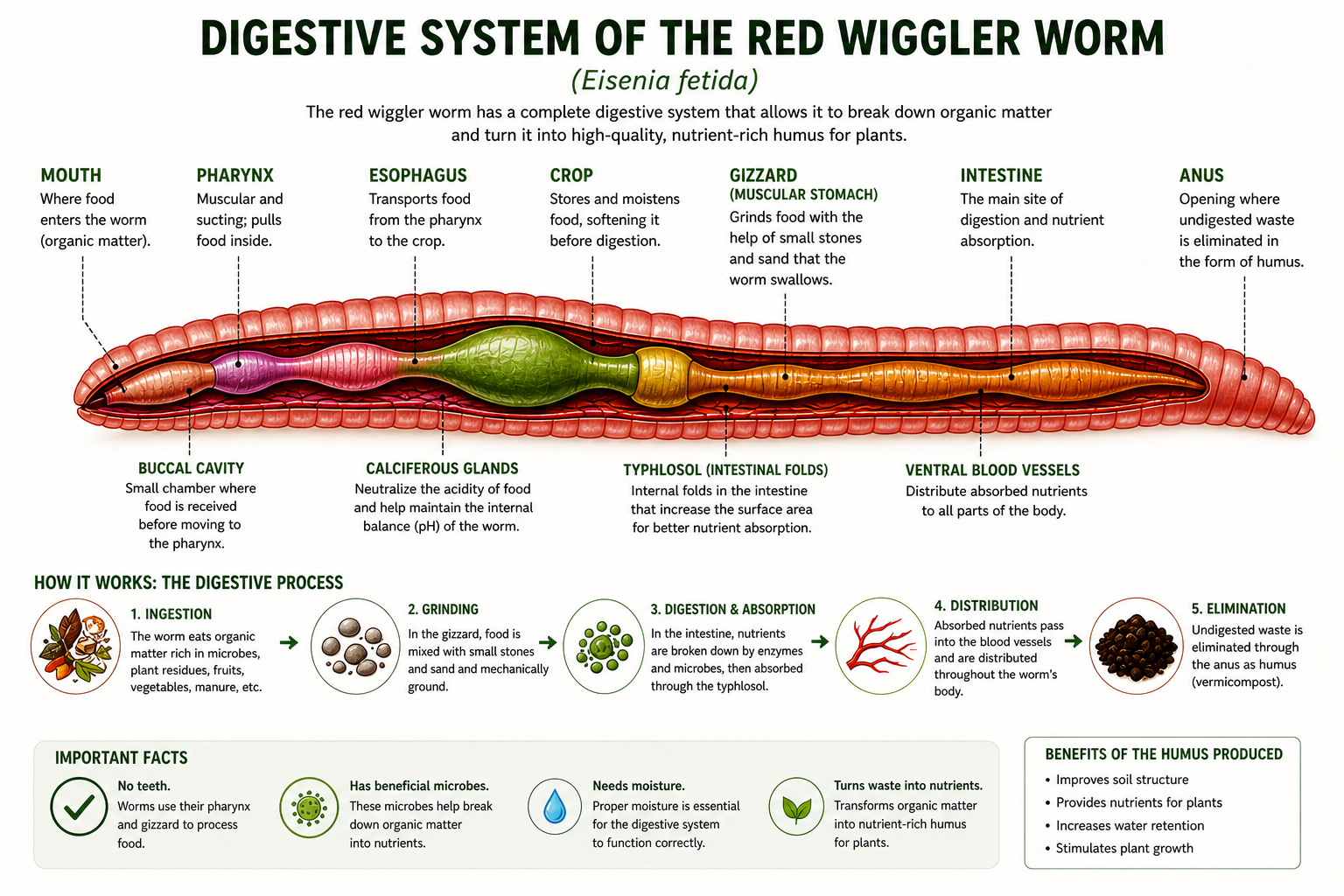
What worms can eat
Fruits and vegetables
Peels, kitchen scraps, pulp, and leaves. They are rich in water and natural sugars.
They decompose quickly and accelerate the humus production process.
Coffee grounds
Excellent source of nitrogen. Improves microbial activity and compost structure.
Worms convert it into a more stable and balanced material.
Dry leaves
They provide carbon, regulate moisture, and prevent bad odors.
They are key to maintaining system balance.
Cardboard and paper
Without heavy ink. They provide structure and aeration.
They prevent compaction and improve oxygen flow.
Eggshells
Natural source of calcium. They help regulate pH.
Garden waste
Dry grass, leaves, and pruning leftovers.
They increase the biological diversity of the humus.
What you should NOT add
- Meat or fish
- Dairy products
- Greasy or processed food
- Excess citrus
- Chemicals or pesticides
These materials generate bad odors, attract pests, and break the balance of the system.
Conclusion
The worm does not just decompose: it improves. It converts waste into a living fertilizer, rich in microorganisms and ready to nourish plants naturally.
The better you feed your worms, the better the result you will get.